
Motorized Screens
Motorized Screens for Lanais and Patios
Lower a screen across the sunny side of the lanai when you need it. Raise it back out of sight when you want the view.
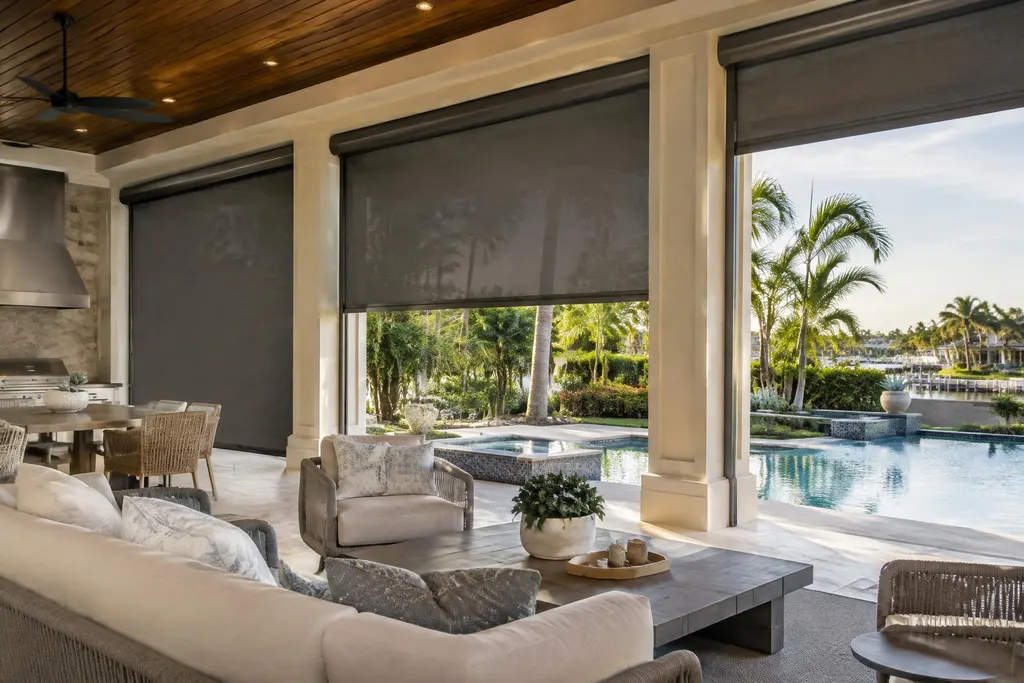
Vertical Coverage
Coverage from the side, where awnings can't reach
Motorized screens lower vertically from a slim housing at the top of an opening and raise back up when you don't need them.
Many outdoor living spaces in Florida are already covered overhead. A lanai with a solid roof, or a patio under an extended roofline, has shade above it — yet can still feel bright and warm in the late afternoon. That's because the sun at those hours comes in low, from the side, through the open bays.
Outdoor motorized screens address that side exposure. Lowered across an opening, a screen softens the incoming sun and glare. Raised, it disappears into its housing and the space is open again, with nothing between you and the view.
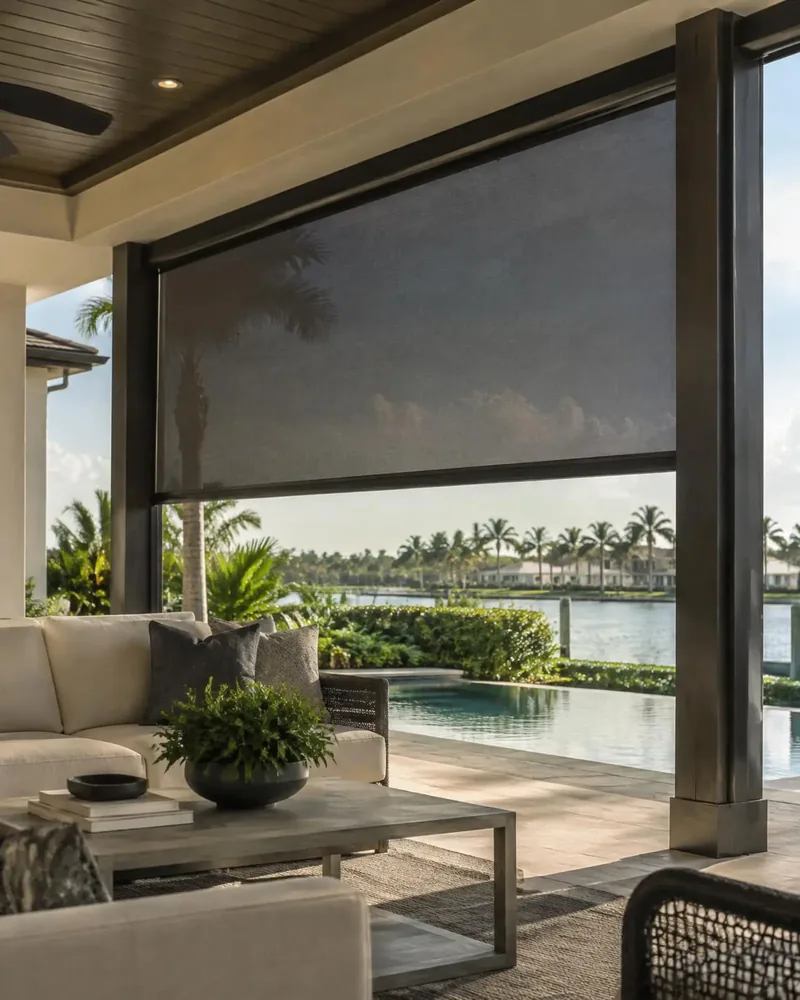
The Difference
Overhead shade and vertical screens
Awnings
Extend outward from the house to shade from above. Most effective when the sun is high — the middle of the day.
Screens
Lower vertically across an opening to cover the side of a space. Most useful when the sun is low — morning and late afternoon.
The two aren't competing choices. A space with an open patio may start with an awning; a covered lanai may need only screens; some homes use both.
Where They Fit
Where motorized patio and lanai screens are used
- Lanai bays
- Between the columns of a covered lanai, where low sun and glare come in from the open sides.
- Covered patios
- Along the open edge of a patio under a roof or overhang, to add side coverage when needed.
- Outdoor kitchens
- Beside a cooking and dining area that catches late-day sun on one or more sides.
- Seating areas
- Around an outdoor living room, to make the space more comfortable and a little more sheltered.
- Large openings
- Wide spans where a motor makes raising and lowering a large screen far easier.
- Spaces you open and close often
- Anywhere you expect to adjust the screens through the day, not just once.
Planning
Planning motorized screens, one opening at a time
Screens are planned around the openings themselves. Each bay or side is measured and considered on its own, since different sides of a lanai see sun at different times.
Measuring the openings
The width and height of each opening, the surfaces at the top and sides where the housing and guides would mount, and the condition of those surfaces all shape what's possible.
Choosing which sides to screen
It isn't always necessary to screen every opening. Often the most benefit comes from the sides that face the afternoon sun, while other openings are left open to keep the view and airflow.
Keeping the space open
One of the advantages of motorized screens is that they don't have to change the feel of the space. When raised, they sit in their housings and the lanai looks and feels open.
Motorized or hand-operated?
Motorized operation is convenient for larger openings and for screens you plan to use often. For some openings, a hand-operated option may suit just as well — you can compare both approaches in our guide to retractable patio and lanai screens.
Florida Living
Made for the late-day Gulf Coast sun
In Bradenton, many homes are oriented toward pools, water or open yards, and late-afternoon sun can pour straight into a lanai that's otherwise shaded. Motorized screens give you a way to manage that light on the hours and days you choose, without permanently closing in the space.
A project begins with a free estimate. We look at each opening, talk about when and how you use the space, and recommend a screen layout with pricing for your project.
What are motorized screens?
Motorized screens are vertical screens that lower from a housing mounted at the top of an opening and raise back up into it, operated by a motor. They're commonly installed between the columns of a lanai or along the open sides of a covered patio.
How are motorized screens different from an awning?
An awning provides shade from above. A motorized screen covers the side of a space, which helps with sun and glare that come in at a low angle in the morning or late afternoon. Many homes use one, the other, or both.
Can I see out when the screens are down?
Screen materials are typically a mesh, so some view through the screen is usually maintained, though less than with the screen raised. When raised, the screen retracts into its housing and the opening is fully open again.
Can each opening be controlled separately?
Screens are usually planned opening by opening, so you can lower only the sides that face the sun at a given time. How the screens are configured and operated is something we talk through during the estimate.
Free Estimate
Plan screens for your lanai or patio
Request a free estimate. We'll measure your openings, talk through which sides to screen and explain your options.
Call or request online
941-491-0304Mon–Fri 7:00 AM–7:00 PM · Sat–Sun 7:00 AM–5:00 PM
Request a Free Estimate