
Bradenton, FL
Retractable Screens for Patios and Lanais
Roll a screen down across an open side of the patio when you need it. Roll it back up, and the opening — and the view — is yours again.
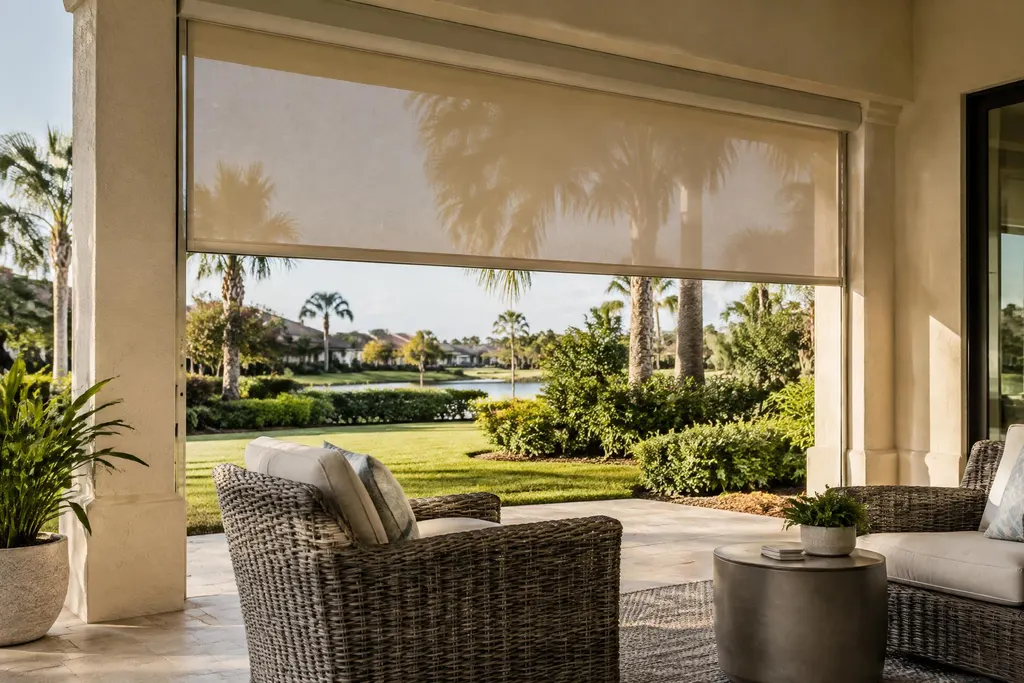
Retractable Screens
Vertical coverage that disappears when you're done
Retractable screens give a covered patio or lanai a way to add side coverage without closing in the space.
A retractable screen is mounted at the top of an opening. Lowered, it covers the opening from top to bottom; raised, it rolls back into a compact housing and is barely noticeable. That's the main appeal — the screen is there when you want it and out of the way when you don't.
Retractable screens can be hand-operated or motorized. The difference is simply how the screen is raised and lowered; both preserve the open view when the screen is up.
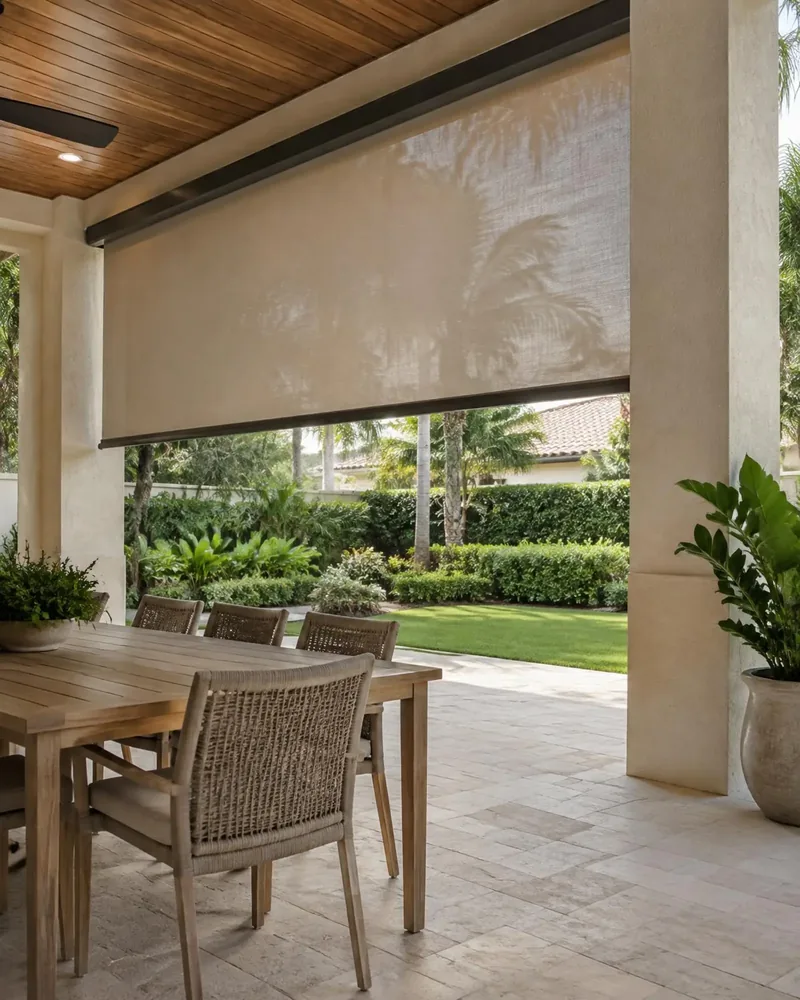
Applications
Where retractable patio screens make sense
Retractable screens are most useful wherever a space is covered overhead but open on one or more sides.
- Patio openings
- The open edge of a covered patio, where sun or glare reaches the seating area from the side.
- Lanai openings
- Between the columns of a lanai, to cover the bays that face the late-day sun.
- Covered outdoor rooms
- An outdoor living or dining area under a roof that you'd like to feel a little more sheltered.
- Openings with a view
- Places where a permanent screen would block the view you bought the house for.
Planning
What goes into planning retractable screen installation
A retractable screen is fitted to the opening it covers, so the planning starts there.
Opening dimensions
Each opening is measured for width and height. Openings on the same lanai often differ slightly, so they're considered individually rather than assumed to match.
Mounting surfaces
The housing mounts at the top of the opening and the screen runs in guides along the sides. The beam, columns or walls around each opening need to provide a suitable surface for both.
Which sides to cover
Not every opening needs a screen. The sides that face the strongest sun at the times you use the space usually matter most; others can stay open for airflow and views.
Hand-operated or motorized
Smaller openings and screens you lower occasionally may work well by hand. Larger openings, or screens you'll adjust often, are often easier with a motor.
Working Together
How screens and awnings complement each other
Awnings and screens solve different problems. An awning adds shade from above and is often the first step for an uncovered patio. Screens add coverage from the side and are often the missing piece on a lanai that's already roofed.
On Gulf Coast homes in Bradenton, it's common for a covered space to stay comfortable through midday and then catch strong sun as it drops lower in the afternoon. Lanai screens on the sunny side can make that part of the day more comfortable while the rest of the space stays open.
If you're weighing who to trust with the work, learn more about Bradenton Awnings and how we approach each project. Every project begins with a free estimate, where we measure the openings, talk through how you use the space, and provide pricing.
What is a retractable screen?
A retractable screen is a vertical screen that rolls down across an opening when you want coverage and rolls back up into a housing when you don't. Retractable screens may be operated by hand or by motor.
What's the difference between retractable screens and fixed screen panels?
A fixed screen panel stays in place permanently. A retractable screen can be lowered and raised, so the opening can be fully open when the screen is up.
How big an opening can a retractable screen cover?
It depends on the screen system and the opening itself — its width, height and the surfaces available for mounting. We measure each opening during the estimate and recommend what will fit.
Do I need an awning and screens, or just one?
It depends on where the sun reaches your space. An uncovered patio often benefits most from an overhead awning first. A covered lanai or patio usually needs side coverage, which is where screens help. Some homes use both.
Free Estimate
Find the right screens for your openings
Request a free estimate and we'll measure your patio or lanai openings and walk you through the options.
Call or request online
941-491-0304Mon–Fri 7:00 AM–7:00 PM · Sat–Sun 7:00 AM–5:00 PM
Request a Free Estimate